Tuesday, February 15, 2011

Haifa and Akko: Pretty Gardens, Stupid Crusaders

One weekend Michal and I went to Haifa, on the coast in the north of Israel.

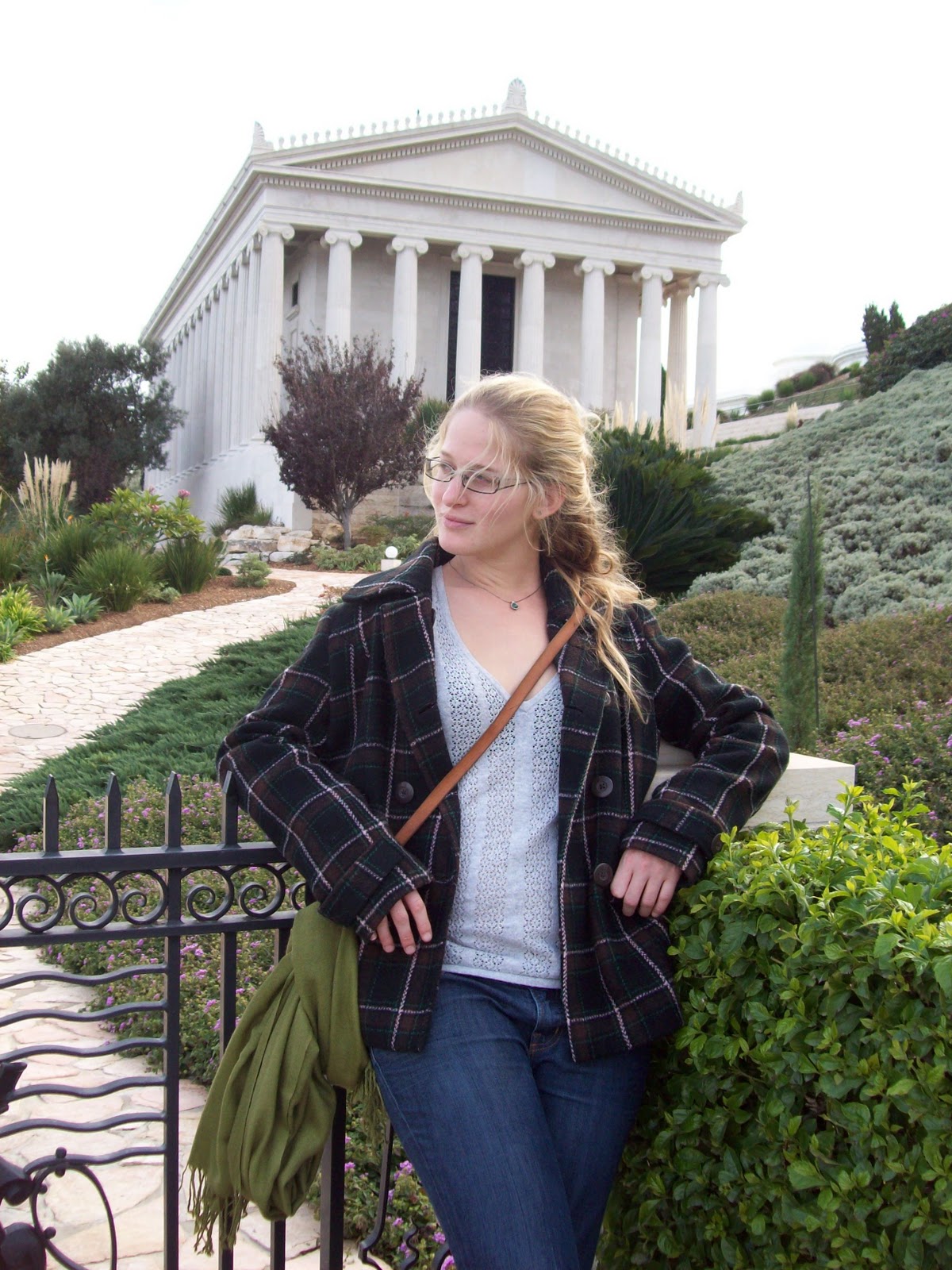
The main attraction in Haifa is the Bahai Gardens, a series of beautifully manicured terraces running up the steep hill above the harbor.


There is water cascading down from terrace to terrace, filling the entire garden with the sound of running water.


The Bahai Faith is pretty young, as religions go.  It began in Persia (modern day Iran) in the mid nineteenth century with Báb (Arabic for 'Gate'), who declared himself to be the Mahdi, the twelfth Imam whose return from hiding (according to Shi'a tradition) presages the end of the world.


Somewhat unsurprisingly, Islamic authorities in Persia didn't take too kindly to Báb's claims.  He was publicly executed in Tabriz in 1850.  Note that there isn't any 'lens-warp' going on here.  The gardens really are shaped like that.


Before his death, Báb made numerous references to the imminent coming of a Promised One.  Within 20 years of Báb's death (according to Wikipedia), more than 25 people claimed to be this Promised One.


One fellow in particular, though, Bahá'u'lláh, eventually attracted the support of the majority of Baha'i.  

By 1863, Bahá'u'lláh openly claimed to be "Him whom God shall make manifest," the culmination (according to him) of pretty much all major religions' prophecies including (but not limited to!) the "Everlasting Father" (Judaism), the "Lord of Hosts" (Christianity) and the "Third Imam" returned (Shi'a Islam).  Good work if you can get it, I suppose.


It's only a fountain..  Also, that's a completely ridiculous amount of hair.
Her: "Why did you spend so much time looking at the fountain?"
Me: "I was admiring the quality construction."
Her: "..."
Me: "Seriously, it's actually really tough to get water to cascade that evenly over so long a distance."
Her: "..."
Me: "No, really you need to maintain a tolerance of something like.."
Her: "..."
Me: "I'm going to stop talking now."
Anyway...

Over the next 30 years, Bahá'u'lláh wandered the Ottoman Empire in various states of banishment and imprisonment, finally settling in Akko, Palestine (just north of Haifa).  The sites of his imprisonment and burial (in Akko) are also holy places for the Baha'i whereas these gardens are a shrine to Báb.


It's like Where's Waldo the blonde Israeli version.


This shot was an accident, but I like it anyway.  I don't know why.


The gardens are pretty, but it's tough to get a good explanation about actual Baha'i beliefs.  After being persecuted for so long in Persia, they are pretty cagey about appearing to be trying to convert anyone, particularly Jews.

After the gardens, Michal and I wandered down to the Arabic market.  There was something of a festival going on, I'm not sure what for. Didn't much matter, really.  All that mattered to me is that I was hungry and everything smelled fabulous.  If you're in the mood, these markets are like a buffet: you wander along and try a little bit of everything that looks good.  "What's this?" "{Arabic Arabic Arabic}" "Great, I'll take two."


For gawd's sake, woman, don't take my picture just after I've stuffed my mouth with something.  I'm chewing here!  Sigh.  She thinks she's soo funny...


On the walk back up to the car, Haifa at sunset.

The next day, bereft of company (she said something about needing to "study" or "attend classes" or something like that.  I'm not sure, I wasn't really listening), I headed off to Akko (aka Acre).  Akko's history reads a lot like Jaffa's: port town occupied from the earliest stages of recorded history, mentioned in the Bible, yadda yadda yadda. It's during the crusades that things started getting interesting.  In the sense of the Chinese curse, that is.

Acre was first 'liberated' from 'Mohammedan' control in 1104 by King Baldwin I of Jerusalem, after which it became the principle Crusader port in the Levant.  Saladin re-took the city in 1187 only to lose it four years later in 1191 to King Richard I (the Lionheart) of England. Following the fall of Jerusalem in 1192, Acre became the Crusader capital until it was finally (permanently) lost to Christian rule in 1291. The conquering Mameluks completely destroyed the city and its fortifications in order to prevent a return of the Crusaders and for the next five hundred years there wasn't an Acre to speak of (when the Mameluks destroy a city, it stays destroyed).

It was only in the late 18th century that the Ottoman governor of Damascus set about rebuilding the port facilities.


These walls date from the late 18th century rebuilding and successfully repelled Napoleon in 1799.

To be fair, the mean ole British had stolen his heavy siege artillery and poor reconnaissance failed to note the opposing vertical wall of the moat.  Thus, despite successfully opening a breach in the main walls, Napoleon's assault force came under murderous fire as they were forced to assemble ladders to descend into the moat itself. Whoops!


The sea gate below and the port beyond.


I can ignore safety regulations in three different languages!  At the same time!


The builders of Acco's mosque stole these columns from the nearby Roman ruin of Caesarea.  I suppose the Romans weren't really using them anymore..


Nice.


The sea gate from the inside.  Note the dogleg which requires an attacking force to slow down and negotiate the turn.


I amaze myself sometimes.  It seems I didn't bother taking a photo of the outside of the Citadel.  Little help, wikipedia?  Thanks.


When the Ottomans rebuilt their citadel atop the ruins of the Crusader fortress, they just filled everything in with dirt and started fresh.  This sort of thing makes modern archeologists ecstatic.


These halls might well have played host to Marco Polo at the beginning of his journey to China.


The tombstone of a Knight Hospitaller.


Wow, I'm all shivery.  This stuff is straight out of Indiana Jones and I'm lovin' it.


Though bad at accurately naming things, the Crusaders were certainly hip to the fact that they were not in friendly territory.  This tunnel leads from the citadel to the harbor, handy for provisioning by sea and, if necessary, escaping the fall of the city.


Oh, Christ, it's a Saladin.  Everybody get in the boat.  We're going to Rhodes.


My ticket to the Citadel also got me into the Turkish baths, which operated from 1795 until 1950.  It was a pretty cheesy audio/video tour with bad actors and worse voice overs, but the beauty of the place cannot be denied.  Wikipedia's version of this photo blows mine out of the water.


Inlaid tile and stone floors.


Tile on the walls.


The 'Khan al-Umdan' or 'Inn of the Columns.'  The eponymous columns were also stolen from Caesarea.

Wanna make your brain go all tingly?  Are you ready for it?  Ok, here we go: compare the architectural styling of the Khan al-Umdan (built by the Ottoman Turks) to the Antiguo Colegio de San Ildefonso or the Palacio Gobierno in Mexico City.


These are reprints..


..from earlier posts.

The Umayyad Caliphate invaded the Iberian Peninsula in the 8th century and Muslim forces controlled varying (but generally diminishing) portions all the way up through 1492.  Thus, much of classical 'Spanish' architecture borrows heavily (to put it politely) from classical Muslim architecture.  The Spainish 're-conquered' the Iberian Peninsula and then (somewhat bored) devoted themselves to setting up a pretty decent little colonial empire in the New World.  500 plus years later buildings halfway around the world from each other both geographically and culturally look like they might have been designed by the same architect.

Incidentally, as I was uploading the Khan al-Umdan shot, Michal piped up: "Hey, that looks like a building I saw in Ciudad Oaxaca!"  And there I was all set to impress her with my historical knowledge and whatnot.  Way to steal my thunder.


Clever.  Too clever.

Friday, February 11, 2011

Jerusalem: Bits and Bobs

More assorted shots of J-town..

Somewhat oddly, the best view of (Jewish holy site) the Western Wall is from the walkway up to (Muslim controlled holy site) the Temple Mount.

This wall is holy to Jews because it is all that remains of the second temple, which was razed in 70 A.D. by the Romans following their victory over rebellious Jews.  According to leading rabbis, the holy presence (imbued by the Ark of the Covenant) has never left this site.  Also, it's pretty much all the Jews have got, what with the Temple Mount itself being under Muslim administration.


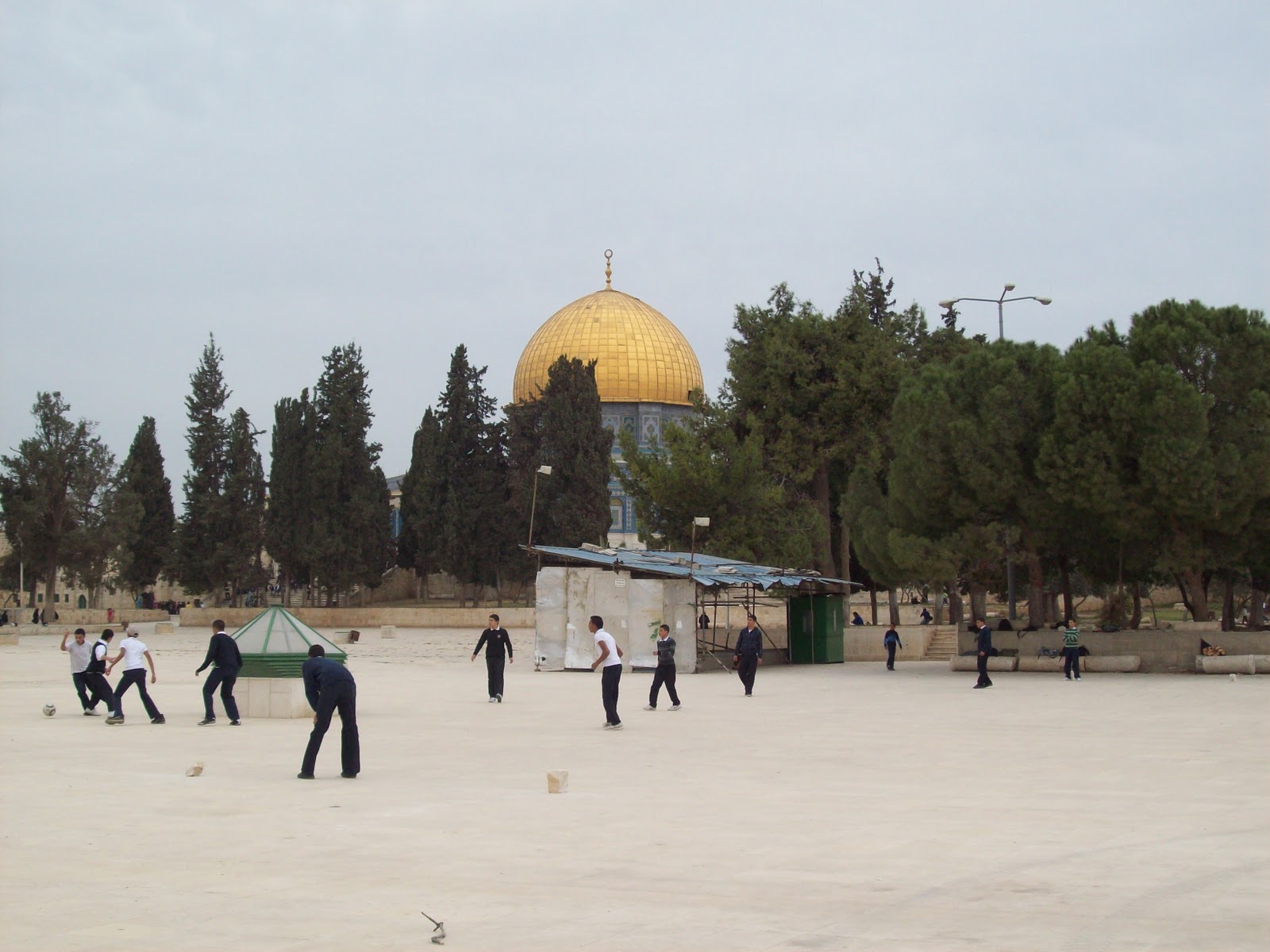
After the dense, sinuous twisting of Old Jerusalem's winding alleys, the Temple Mount is shockingly large and expansive.  This was only one of several simultaneous soccer games.


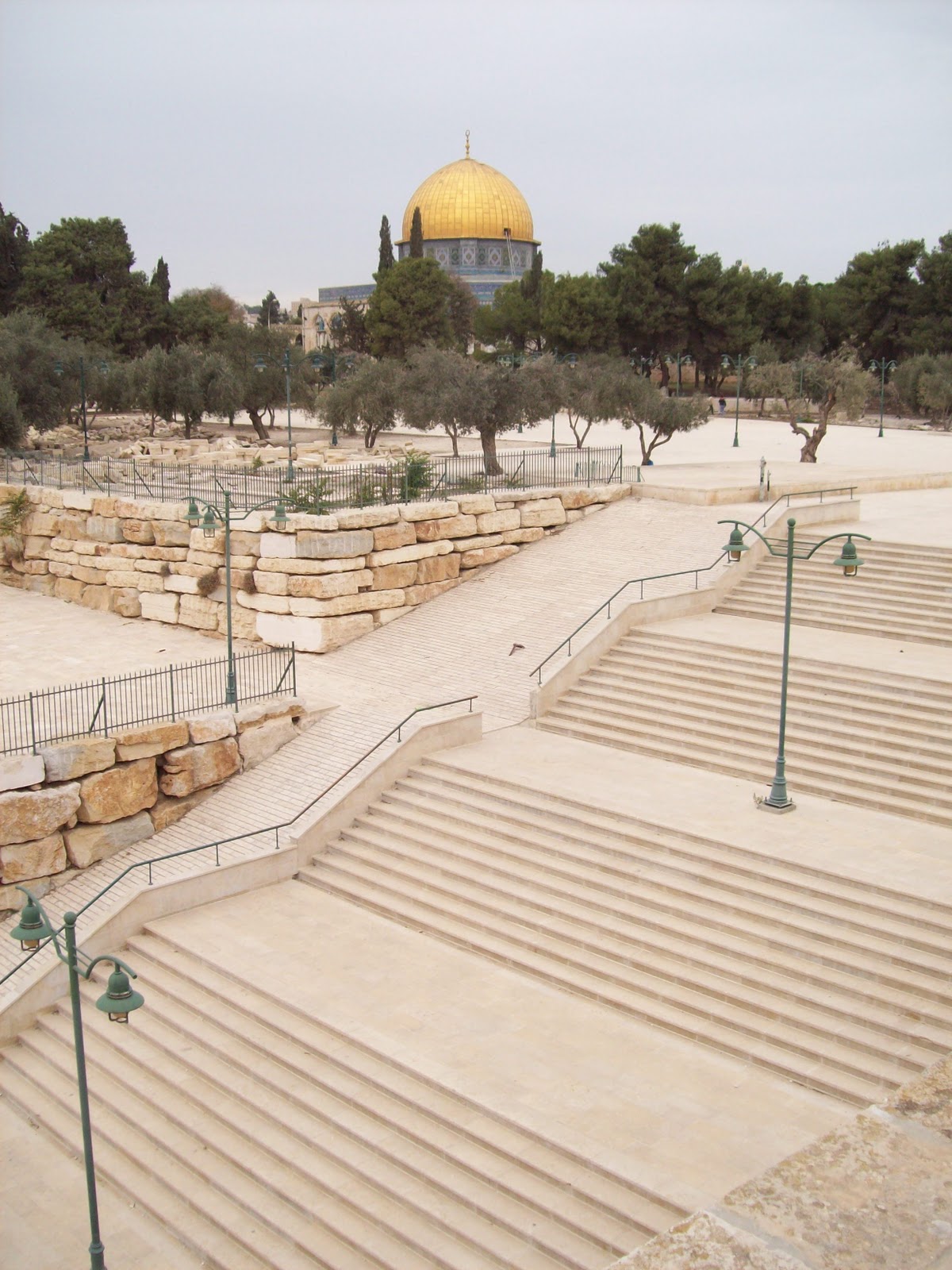
These stairs lead down to Solomon's Stables, a series of vaults actually constructed by Herod in order to reduce pressure on the retaining walls (the bedrock at this point drops well below the level of the Temple Mount plaza).  The Christian Crusaders called these vaults Solomon's Stables because (1) they didn't know Herod from Solomon and (2) they kept their horses there.  Classy guys, those Crusaders.


Mmm.. peaceful greenery.


The Dome of the Rock, built in 691 A.D. atop the highest point of Mount Moriah, the 'Foundation Stone.'  That's 80 kilos (176 pounds) of pure gold on the dome, donated in 1993 by King Hussein of Jordan.  At current prices, 80 kg of gold is worth over $3.4 million.

According to Jewish tradition, the Foundation Stone is where the Earth itself began, where Adam, Cain, Abel and Noah offered up sacrifices to God and where Abraham nearly sacrificed his son Isaac.  It was the centerpiece of the first and second temples, the Holy of Holies, where the Ark of the Covenant rested.  It is also, according to Muslim tradition, the location to which Mohammed traveled in his Night Journey (to the 'farthest mosque,' assumed to be in Jerusalem) and from which Mohammed ascended to heaven to meet Allah.

Maybe now you see why Jerusalem is so problematic.

Unfortunately, non-Muslims (infidels, if you will) are not permitted to enter the Dome of the Rock.  Fortunately the internet is a power that shall not be denied.


Behold! The most contentious fucking rock on the planet! Photo credit: damonlynch.

Quite frankly, I don't see what all the fuss is about.  Moving right along..

I went to the so-called Tower of David in Jerusalem, "so-called" because it was those ignoramuses the Crusaders that first christened the fortifications at Jerusalem's high point (other than the Temple Mount) "David's" tower.  As a point of fact, this strategic location was probably first fortifed during the Hasmonean period, around 200 B.C.E.  Herod the Great oversaw a major expansion, building three massive square towers from 37 - 40 B.C.E., the foundations of which underlie the existing structures.


The Temple Mount is the big square thing in back.  Herod's Palaces and the Tower of David are opposite, where the walls crook in a bit.


Here's what it looks like today ("It's only a model")..


..and here's the view from the top of the tower (about 180° from the previous view).

It's a damn cool lookin' castle, all around, and there's a really nice museum scattered throughout.  Unfortunately, interesting, nicely laid out, well-explicated museums don't photograph well (let me know if any of you are, in fact, interested in nine separate photos mapping out the historical expansion and contraction of the city of Jerusalem.  Yeah, didn't think so)


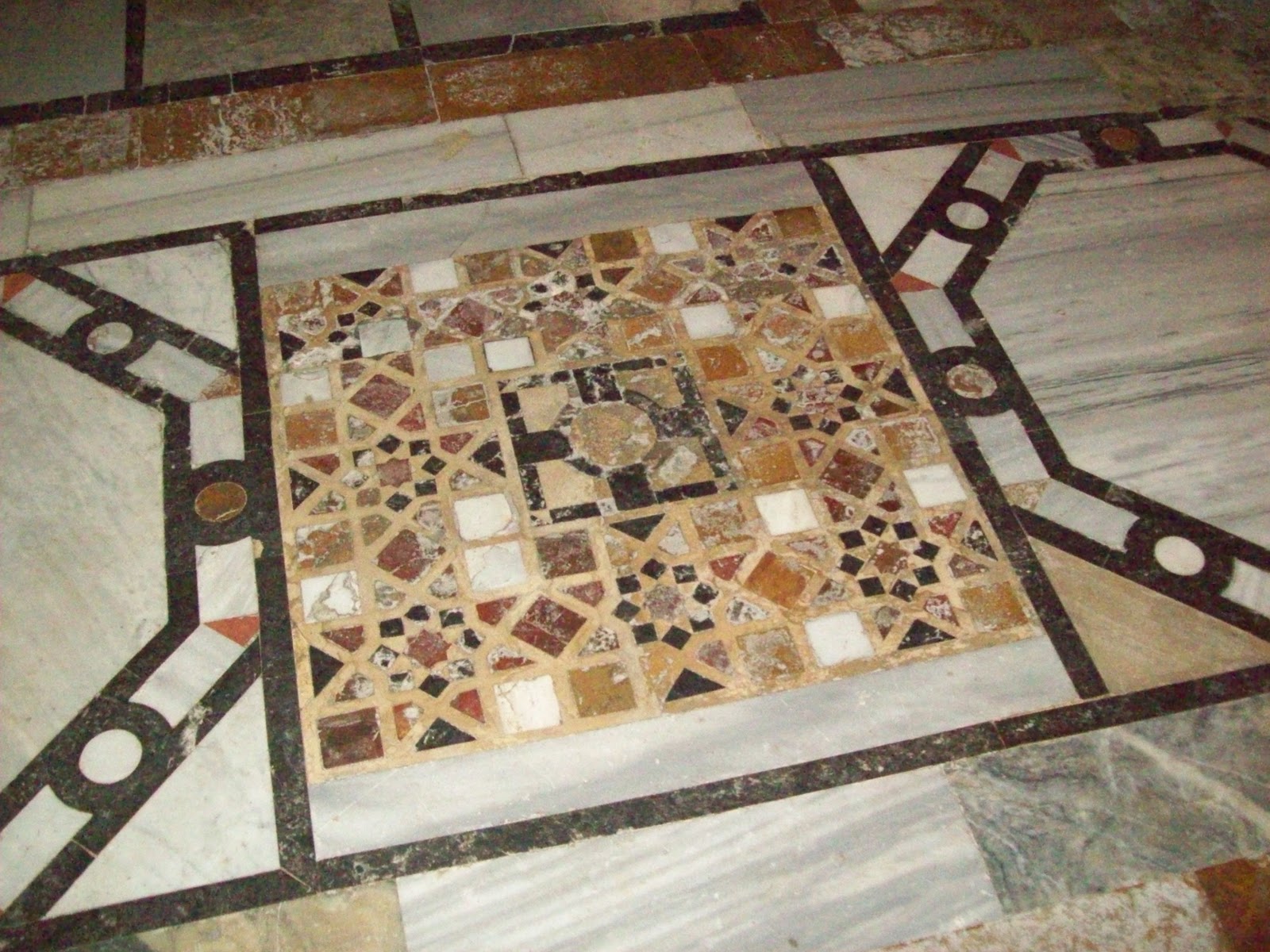
A mosaic left over from when the Byzantines were in charge.


Ok, now this is actually outrageously cool.  Those rocks at the bottom of the pit?  The round ones?


2,200 year old cannon balls, left over from when the Seleucids besieged Jerusalem.  Seriously, how cool is that?


So cool I took a picture of the sign, too.


And what 2,000 year old castle would be complete without an espresso stand?

Even worse, all of those seats on the lower right of the panorama are for the Sound and Light Show!  Yes, ladies and gentlemen, "Amidst the archaeological remains in the Citadel’s courtyard and to the sound of original music, the story of Jerusalem unfolds through giant breathtaking, virtual reality images."  Buy your tickets now!

Ugh, gag me with a spoon.

Monday, February 7, 2011

Jaffa and Jerusalem: Odds and Ends

Unfortunately, I wasn't always able to do as little as I might have liked.  Within about a week of my arrival, one of Michal's roommates started asking pointed questions about how long I'd be staying (the other roommate is cool).  Hoping to avoid precipitating a confrontation so soon after my arrival, Michal and I agreed that I should take a trip away from Jerusalem for a few days.

Right, we agreed.  That's the party line and I'm stickin' to it.  In any case, it was off to Tel Aviv and Jaffa.


Holy shit, a floating tree.

Tel Aviv is the modern, fast paced and international counterpart to Jerusalem.  It's a great place for the rich, young and beautiful to get drunk.  As such, it doesn't have much to offer the budget backpacker.


The skyscrapers of Tel Aviv rise north of the old city of Jaffa.

Jaffa, on the other hand, is a nice little port city just a few kilometers south of downtown Tel Aviv.  It is one of the oldest ports in the world: archeological evidence indicates the central hill has been occupied since around 7,500 B.C.E.  Its natural harbor has been in use since the Bronze Age and its conquest is mentioned in an Egpytian letter dating to 1,440 B.C.E.  It is also mentioned several times in the Old Testament, most memorably as the port of entry for the Lebanon cedars used in the construction of the second temple in Jerusalem.  It was also the first stop in the Holy Land for most European pilgrims on their way to Jerusalem, Bethlehem, etc.


A panorama from the seawall. Click to view giant.


Unfortunately, nearly 10,000 years of continuous occupation tends to bury and destroy previous contructions.  This here is.. a wall.  It's a couple of thousand years old, but underneath it is.. another wall!  An older wall!  Riiight.


Imagine here the triumphal entry to the Egyptian fort that guarded the harbor.  Ok, then, moving on..


Hey, that's kinda nice.

I was planning on being in Tel Aviv/Jaffa for four or five days, until the next weekend.  But it was too chilly to hang out on the beach, too expensive to get drunk and pretty though Old Jaffa may be, it is really tiny.  After one night in Tel Aviv, I walked down to Jaffa, took a bunch of pictures and bought some really tasty hummus, which I ate on the seawall.  Monday night I was online kvetching to Michal: "There's nothing fun to do, and it's really expensive." "Oh, sorry.." "Can I come back early?" "You mean like earlier in the day on Thursday?" (the weekend in Israel is Friday and Saturday) "No, like, tomorrow." "Um, I guess if.." "Great!  See you tomorrow!"

And so after only a few days I was back to my cozy, peaceful existence in Jerusalem.  Michal's roommate may have won a battle, but I won the war.

And so here are a hodge podge of photos taken over the next couple of weeks in Jerusalem.


Fake Christmas trees for sale in old Jerusalem.

Now, wait a second, let's stop and think about this.  Christmas is a major Christian holiday and Jerusalem is Christianity's holiest city.  Ok so far.  Buut.. Christmas trees are essentially pagan symbols that originated in Medieval Europe.  Even the date we celebrate Christmas was probably selected to coincide with pagan celebrations of the winter solstice.  "A spoon full of sugar.." and all that.

So, to review: 2,000 years ago an unruly Jewish carpenter gets killed in Jerusalem at the behest of the established powers.  After surviving a couple hundred years of Roman persecution, the emperor converts and things start looking up.  However, it's more than a thousand years after the reign of Constantine that the use of Christmas trees is first documented in (the regions now called) Estonia, Latvia and Northern Germany, at which point Jerusalem was firmly in the hands of the Ottoman Turks.  Five hundred years further on the Brits have kicked out the Turks only to hand the whole steaming mess over to the Zionists, who despite numerical and territorial inferiority have managed to put together a nice little open, tolerant Western-style democracy.

All of which makes it possible for this shopkeeper to overcharge for a pile of green-painted plastic.  You couldn't make this up if you tried.


A pile o' spices topped by a miniature Dome o' the Rock.


The Damascus gate, aka the Shechem Gate (Hebrew שער שכם), aka the Gate of the Column (Arabic باب العامود).  Many occupiers, much history, many names.  The Roman gate has been excavated below this iteration (which was constructed by Suleiman the Magnificent in 1542) and is a good 5 meters below modern ground level.


There was all sorts of construction blocking the view when I was there, but keithwills took a pretty nice shot of it.


For the Christmas Eve Shabbat dinner (it happened to fall on a Friday and there happened to be a pot luck planned) I made a pumpkin pie.  From scratch.  Including the pie crust.  Without a cuisinart.  In a rectangular pan.


Hell yeah.  It takes a real man to bake this well.


Old Jeruslam is very much a living city.


It is also surprisingly quiet and deserted away from the main thoroughfares.


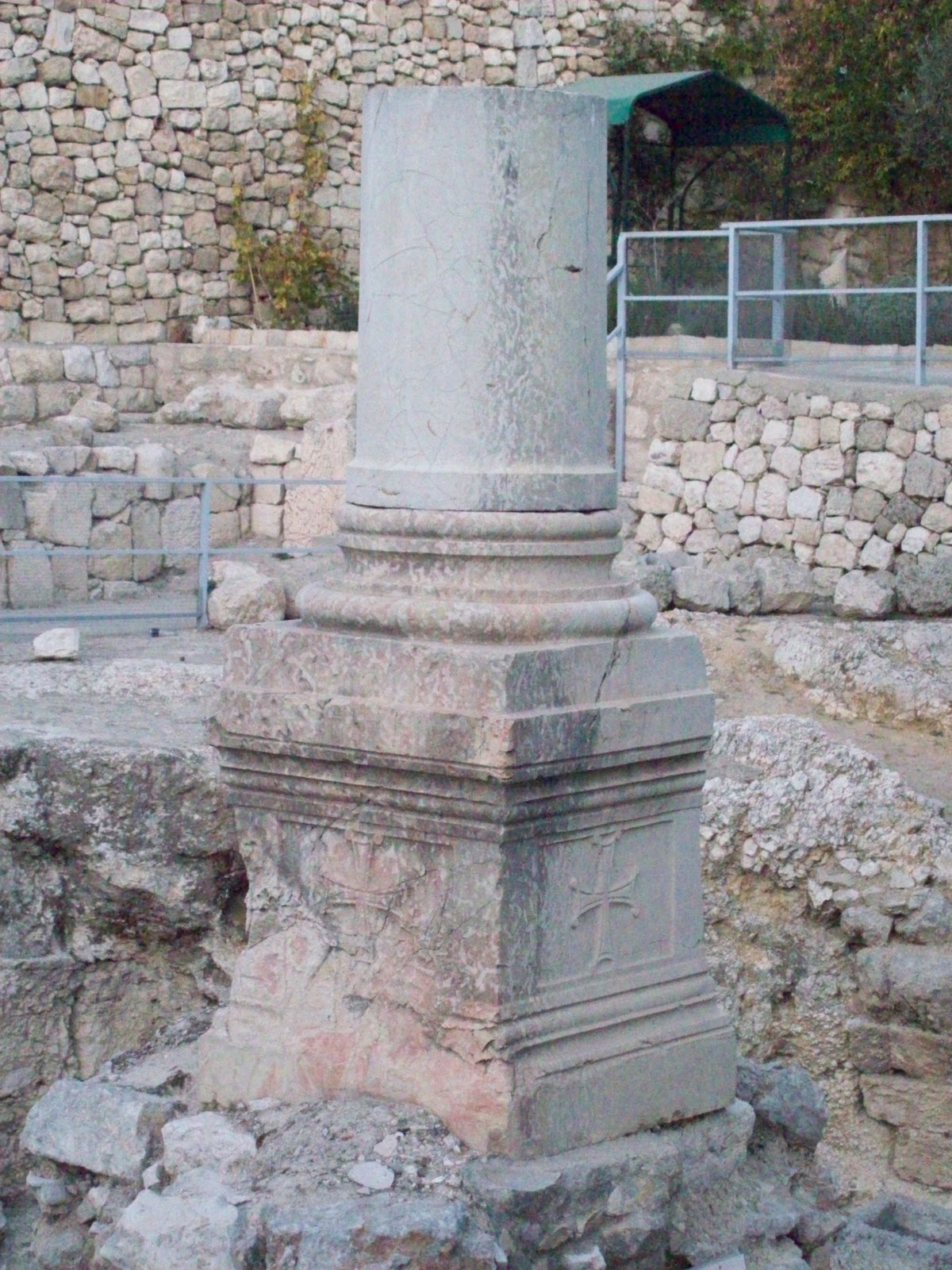
A column base decorated with Crusader crosses located at the Pool of Bethesda, where Jesus purportedly healed the sick.

The pool and associated churches were only excavated in the 19th and 20th centuries, before when New Testament references were believed to have been fabrications.  But archeologists found the location and disposition of the pool and surrounding structures to precisely match descriptions in both the Old and New Testaments.  Hmph.  Who'd a thunk?


The sun sets on a minaret within the compound of the Temple Mount.  Soon the call to prayer will float out across Jerusalem.


The Dome of the Rock by night.


Another night view of the Dome of the Rock, this from outside the city walls.  In the foreground, ruins of Medieval constructions.


A night view of the walls surrounding the Jaffa Gate.

Coming soon: more Jerusalem miscellany.

Thursday, January 20, 2011

Jerusalem: The Church of the Holy Sepulcher

What exactly have I been doing in the Middle East for the last month and a half?

Wait a second, what am I doing in the Middle East in the first place? I blame Michal.*


Long story short, we met while traveling in Nicaragua and kinda hit it off. We traveled together for about a month total but, in the end, I had a ticket from Panama back up to the States.

:, (

We kept in touch over the next couple of months, she from Israel and I from South America. "You should come to Israel some time," she said. "You should be careful what you wish for," I responded. "I have more frequent flyer miles than I know what to do with.. I might just show up." "No, no," she insisted, "it would be great! Come!"

Boy, was she surprised when I told her I'd bought a ticket. Arriving December 1st. "But aren't you only in Ecuador? I thought you were going all the way to Buenos Aires?" "Yeah, well, I'm getting a little bored with Latin America. Besides, I could go for a falafel." "Oh, well, ok then. See you soon, I guess?"

Truth be told, I was running out of energy. If I hadn't headed for Israel I probably would have gone back to California. Believe it or not, traveling takes a lot of energy. Constantly showing up in a new place, trying to find a decent place to sleep, trying not to get ripped off. Meeting the same basic types of people, telling your same stories over and over and hearing the same sorts of stories in response. Seeing the same sights in different countries ("Oh, there's a hike through the jungle to a waterfall? Lovely. No, thank you, I'll just sit here at the bar."). Packing your damn backpack every couple of days. Being tired, dirty and sleep deprived after 24 hours (or more) on various forms of public transportation.

One comes to long for the familiar. For a routine. To know which is the nice restaurant and which the good bar. To hear your own language spoken on the street and to recognize the food in the supermarket ("Dude, what's peanut butter in Spanish?" "Uh, 'mantiquilla de mani', maybe?" "Then what the hell is this?" "No clue, man."). But really, it's the constant moving that is exhausting.

So, to return to the original question: what have I been doing for more than a month in the Middle East? Not a whole lot, quite frankly. Recharging my batteries, essentially: sleeping late, reading, maybe a little bit of shopping and cooking. Michal gets (mock) angry after returning from class/studying: "What did you do today?"

"..."


I get out every now and then. Here is the Dome of the Rock in front of the Mount of Olives, though neither is our destination for today.


Old Jerusalem is frustratingly narrow and twisty. This makes it difficult to capture in photographs and also very easy to get lost. I paid 5 shekels and climbed this church tower because I couldn't find my way to the Church of the Holy Sepulcher. Oh, there it is.


Here we go.

Not the most illustrious facade, certainly, but there's history here. That ladder, for instance, below the right-hand window. It's a very famous ladder. Just don't touch it. Seriously, a bunch of dudes wearing long beards and black mu-mus will kick your ass.

The story: under the Ottoman Turks (ie, Muslims) the various Christian sects couldn't agree on, well, much of anything to do with the administration and upkeep of the church. So, just to keep things moving along, the Ottomans decreed a status quo which apportioned certain sections of the church to specific sects and furthermore required unanimous agreement in order to alter any of the common areas.


It's alright, I suppose, as ladders go. Photo credit.

Thus an 'immovable' ladder sits below one of the exterior windows because no one is sure who put it there in the first place (some time before 1852) and, apparently, not everyone can agree to remove it (aside: which fractious, uncooperative sphincter is the dissenting vote? How does that meeting go? "Really, Phil? Still? We still can't move the damn ladder? For gawd's sake."). I'm not kidding even a little bit. That ladder has been there for more than 150 years, since before the American Civil War. Ole Honest Abe Lincoln was practicing law in Springfield, Illinois when some absent minded and/or lazy monk decided to cut out a little early, leaving his ladder in place.

That, ladies and gentlemen, is organized religion for ya. In any case, on to the history.

The Church of the Holy Sepulcher is (supposedly) the location of Jesus' crucification, entombment and subsequent return from the dead. It's kinda hard to tell, though, because after St. Helena (mother of Emperor Constantine) identified the location in 326, there has always been some sort of structure covering/obscuring the site. At this point, it looks like a somewhat old-fashioned Christian church with some odd interior structures.


This somber little area, for instance, might well be directly above the rock on which Christ was crucified, just to the right of where the cross itself stood. For those of you keeping score at home, that would be stations of the cross number 10 through 13 (inclusive).


It's not all doom and gloom, though. There are many, many Christian pilgrims in Jerusalem. Only a few of them are semi-transparent Russians, though.


Votive candles illuminating Byzantine style columns.


The other (somber) half is for the Roman Catholics et al. This side is for the Orthodox sects. If I were a dirt worshipping heathen, I know who I'd go for.


The main dome, directly over the Aedicule, which in turn covers the supposed tomb of the big J.C. himself (Himself?). The Aedicule isn't all that impressive, quite frankly: it's somewhat claustrophobic inside and all there is is a bit of polished marble covering the real real tomb. So unimpressive, in fact, that it seems I didn't even take a picture.


Thankfully this guy took a rather nice picture of it.


The second dome. Jesus does not approve.


A last look back through the alleyways expansive thoroughfares of Jerusalem.

On the whole, The Church of the Holy Sepulcher is alright at best. Admittedly, I'm not what you might call the target audience. But still and all. There are many other churches and cathedrals that better display the glory of the Christian faith. St. Peter's and Il Gesu in Rome, Notre Dame in Paris, St. Paul's in London. Even the National Cathedral in Washington, D.C. All are more impressive simply as buildings.

What makes The Church of the Holy Sepulcher special is your own belief, the feeling that you are following in the footsteps of your Lord and Savior. Sharing, in some small way, his pain and sacrifice. Without that, all you have is a dim mishmash of architectural styles on top of an old rock.

Wait a second.. that's pretty much all of Jerusalem.


*A note on pronunciation: the 'ch' in Michal's name represents the Hebrew 'chet' 'kaf' (apparently kaf can be pronounced like chet.  Just goes to show how good my Hebrew is) phoneme, which is very difficult for most Westerners to pronounce. It sounds a little like you're clearing the back of your throat, but very softly. Additionally, the emphasis is on the first syllable, not the second, as would be our inclination in English. So it's 'me' + 'chet' 'kaf' then a soft '-al' like from the English 'hall.' Mich-al. I still only get it right about half the time, and even then she says I have a terrible American accent.